A garage door is easy to treat as a convenience item until storm season arrives. In cyclone-prone areas, it becomes part of the building envelope, and that changes the standard for maintenance. If the door fails, wind can enter the garage and place extra pressure on the rest of the house, including walls and roof areas. That is why garage door tracks deserve more attention than they usually get.
Tracks do not work alone, of course. They form a system with the door panels, rollers, brackets, garage door springs, and garage door openers. When that system is in good condition, the door travels cleanly, closes squarely, and has a better chance of doing its job when strong weather arrives. When the system is worn, loose, or poorly matched to local wind demands, the door can become a weak point.
Queensland guidance is clear on the broad principle: prepare before storm season, and only go outside after it is officially safe. That sounds obvious, but in practice many people leave garage work too late. They notice a wobble in the track or a door that catches on one side, then plan to deal with it “next weekend.” If that weekend lands in the middle of a severe weather warning, the job becomes risky, rushed, or impossible. With garage doors, timing matters nearly as much as the condition of the hardware.
Why the tracks matter more than most homeowners realise
On a calm day, a slightly bent or loose track may look like a minor nuisance. The door still opens, perhaps with a little chatter or shudder. During a cyclone or severe storm, that same fault can matter a great deal. Tracks guide the door vertically and horizontally, helping it stay aligned within the opening. If that guidance is compromised, the door can rack, bind, or fail to seat correctly.
In ordinary maintenance calls, one of the most common patterns is uneven wear caused by small track movement over time. A few loose fasteners, a bracket that has shifted, or corrosion starting near the lower section can change how the rollers carry the load. The owner often notices noise first. What they do not always see is that the door may no longer be closing evenly against the opening. That gap can be small, but it tells you the system is not behaving as designed.
Cyclone preparation is not just about whether a door opens and closes. It is about whether the full assembly is suitable for expected wind pressure and whether it has been maintained so it can perform as intended. Queensland guidance specifically notes that a garage door should comply with AS/NZS 4505 and be correctly rated for wind pressure, or have a bracing system that can be installed before a cyclone. That puts the conversation well beyond lubricating a squeaky roller.
The difference between maintenance and resilience work
Routine maintenance keeps a door usable. Resilience work asks whether the door and frame are the right type for the location and conditions. Homeowners often combine the two, but they are not the same.
A track inspection can uncover maintenance issues such as loosened brackets, obvious damage, or parts that are no longer sitting true. That is worthwhile, and it should be done early, not when a warning has already been issued. But if the door itself is older or non-compliant for local wind conditions, maintenance alone may not be enough. Queensland housing guidance identifies replacement of existing garage doors and frames with wind-rated versions as part of household resilience work, and it specifically points to non-compliant garage doors as a cost-effective target for improving cyclone resilience.
That means there are cases where the right answer is not another repair. It is garage door replacement, including the frame, with a wind-rated assembly suited to the site. Homeowners do not always like hearing that, especially if the current door still “works.” Yet functioning and being cyclone-resilient are different standards.
What to inspect in garage door tracks before storm season
A proper inspection starts with the tracks because they are visible, accessible, and often reveal how well the rest of the system has been treated. You are not trying to diagnose every hidden defect from the driveway. You are looking for signs that the door is no longer moving or seating the way it should.
Here are the main things worth checking before storm season:
- obvious bends, dents, or twisting in the tracks brackets or fixings that look loose, shifted, or corroded rubbing marks that suggest the rollers are not tracking cleanly gaps or uneven closing that show the door is out of alignment lower track areas affected by rust, impact, or repeated water exposure
None of those signs automatically tells you how the door will behave under cyclone pressure, but each one is a reason to have the system assessed properly. Track damage is especially easy to underestimate after a small bump from a vehicle, mower, or stored item. The door may continue to run, but the geometry is no longer right.
One practical clue is side-to-side symmetry. If one track looks clean and true while the other shows scuffing, movement, or different fastener positions, the door may be loading unevenly. Another clue is the sound of travel. A healthy door is not necessarily silent, but a sharp scrape, repeated clicking, or heavy shudder often points back to the track path or roller alignment.
Where tracks intersect with springs and openers
Track maintenance is rarely just track maintenance. A garage door is a linked system, and faults in one area often show up somewhere else first. That is why homeowners can misread the problem.
Garage door springs, for example, influence how evenly the door moves through the tracks. If the spring system is not performing correctly, the door can travel poorly, place unusual load on the rollers, or close with a skew that looks like a track issue. That does not mean every alignment problem starts with springs, only that the two cannot be considered in isolation.
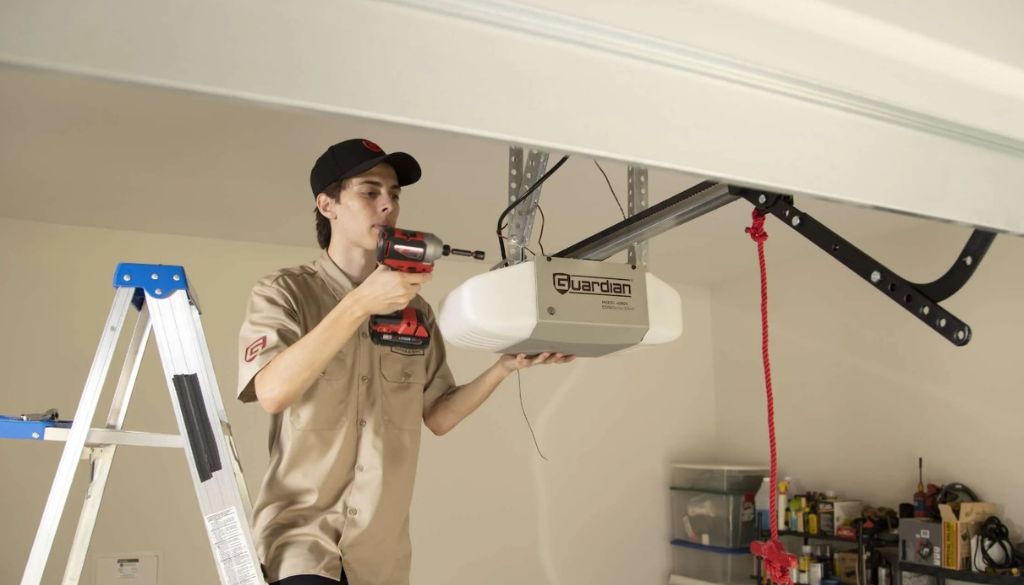
The same applies to garage door openers. An opener may keep dragging a door through a flawed track path long after manual operation would have made the issue obvious. People often say, “The motor still lifts it, so it must be fine.” In reality, the opener may be compensating for resistance rather than proving that the system is healthy. Before severe weather, that is a poor bet to take on a critical opening in the home.
There is another storm-season angle here as well. Queensland advice for severe weather preparation includes unplugging electrical items. For a garage, that brings openers and charging accessories into the conversation. It also means homeowners should know how to operate the door safely according to the installed system, rather than discovering the process in a power disruption. That is not a reason for improvised adjustments or DIY spring work. It is simply a reminder that the garage should be part of the broader household storm plan.
The lower section of the track is often the trouble spot
If I had to nominate one area that gets ignored most often, it would be the lower track sections and the hardware around them. They live close to dust, splash, minor knocks, and whatever gets stored along the garage wall. In attached garages, they also sit in the path of daily traffic, from bicycles to bins to tools leaning where they should not be.
This matters because the lower area controls how the door enters and leaves the opening. If it is compromised, the door may not seat properly when closed. Even a small misalignment at the bottom can translate into a poor fit across the opening.
Anecdotally, the homeowners who are best prepared for storm season are not always the ones with the newest doors. They are the ones who keep the garage usable and visible. Their tracks are not buried behind stacked paint tins and sports gear. They notice when a bracket loosens or when a roller starts marking the metal. That sort of ordinary attention prevents last-minute surprises.
Wind rating is not a cosmetic upgrade
There is a tendency to think of wind-rated doors as premium extras, similar to a finish upgrade or a quieter motor. In cyclone-prone parts of Queensland, that is the wrong frame of mind. Official guidance specifically ties garage doors to wind pressure performance and recognises the value of compliant doors or cyclone bracing systems.
If an existing door is not correctly rated for the site, maintenance of the tracks still has value, but it should not create false confidence. A true track with a non-compliant door is still part of a non-compliant opening. That is why garage door replacement can be the more sensible investment when resilience is the goal.
The same principle applies to frames. A new door on an old frame is not automatically a resilience upgrade. Queensland housing guidance refers to replacing existing garage doors and frames with wind-rated versions. That wording matters. The opening functions as a system, not as a collection of unrelated parts.
Bracing systems and the limits of improvisation
Some doors may rely on a bracing system that can be installed before a cyclone. Where that approach applies, the key issue is preparation, not improvisation. Do not wait until warnings are active to work out whether the bracing is complete, accessible, or compatible with the current door condition.
A track that is bent, obstructed, or loose may interfere with how well the door closes and how effectively any planned bracing can be used. The same goes for missing components or altered hardware. If the system was designed to be braced before a cyclone, then the time to verify that setup is before storm season, while conditions are safe and professional help is available.
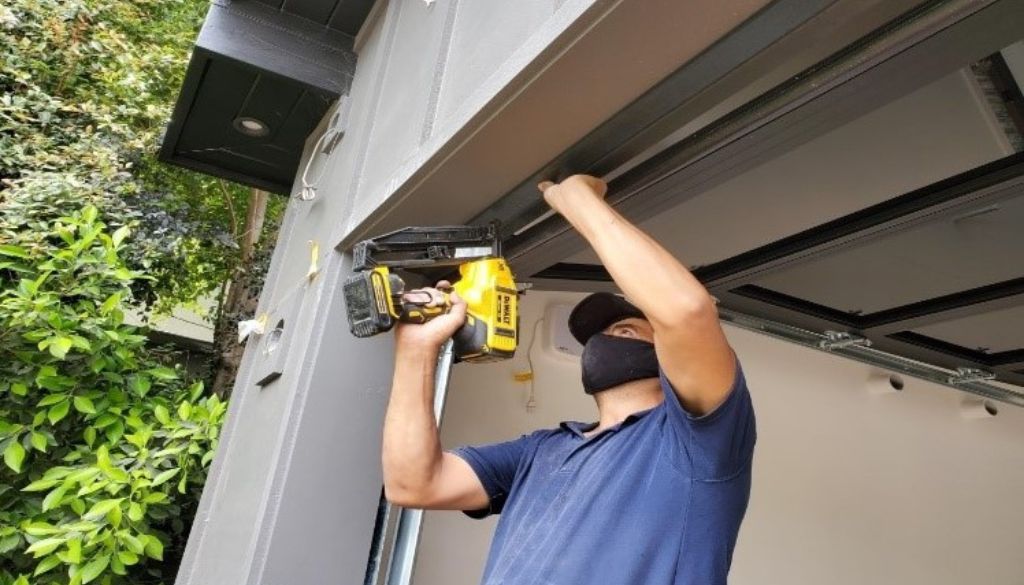
Queensland guidance also stresses safe work practices and using a qualified contractor for securing vulnerable parts of the home where needed. That is especially relevant with garage doors. Springs store energy, openers add force, and even a manual door can be hazardous when adjusted incorrectly. There is nothing sensible about trying to “stiffen up” a questionable track or spring arrangement on the eve of a storm.
The attached garage changes the stakes
When the garage is attached to the house, the door is not only protecting stored items and vehicles. It is also defending a large opening in the building shell. Queensland materials warn that garage door failure can let wind into the home and increase damage to roofs and walls. That is why attached garages deserve priority in pre-season checks.
This is also where small comfort and efficiency details become relevant. Australian energy guidance notes that draught stoppers at the base of doors can garage door resource help reduce heat loss. In an attached garage, that can improve day-to-day comfort and reduce drafts migrating into adjacent rooms. It is not a cyclone measure on its own, and it should never be mistaken for one, but it does encourage homeowners to pay attention to the bottom seal and overall fit of the door. Often, when the bottom edge is obviously uneven or failing to seal properly, the tracks and alignment deserve a closer look too.
A practical pre-season routine
Most people do not need a complex maintenance calendar. They need a repeatable routine that happens before the weather turns.
A sensible pre-season routine usually includes the following:
- inspect the tracks and visible hardware early, while access is easy arrange a qualified assessment if the door is damaged, misaligned, older, or not clearly wind-rated confirm whether the door complies with the relevant standard or uses an approved bracing system clear the garage area so the door can close fully and safely when needed fold the garage into the wider storm plan, including vehicle shelter and electrical precautions
That last point gets overlooked more than it should. Queensland advice for severe weather preparation includes securing loose outdoor items, parking vehicles under shelter if possible, and unplugging electrical items. The garage is often central to all three. If the tracks or door are not reliable, people lose a key sheltered space for vehicles and may delay securing the area until weather is already deteriorating.
Common judgment calls homeowners face
Not every garage door problem leads to immediate replacement. Some issues are straightforward maintenance matters, while others point to broader resilience concerns. The difficulty is knowing which is which.
Take a lightly corroded track in an older garage. If the door is otherwise suitable, correctly rated, and structurally sound, the right response may be targeted repair or part replacement by a qualified professional. On the other hand, if the corrosion appears alongside an older non-compliant door and a frame of uncertain condition, spending money on piecemeal repair can become false economy. That is the moment to discuss garage door replacement seriously.
The same trade-off appears with garage door openers. A new opener can improve daily convenience, but it does not upgrade the wind performance of the door. Homeowners sometimes invest in a motor because the old one is noisy, then assume the whole system is “updated.” From a cyclone-preparation standpoint, that misses the main issue if the door and tracks themselves are not fit for the weather exposure.
Garage door springs create a similar trap. Replacing worn springs may restore smoother movement, but smooth movement is not the same thing as cyclone resilience. Good maintenance is valuable. It is just not a substitute for the right door, frame, and rating.
Product safety and choosing replacement components
Where replacement parts or accessories are involved, safety standards matter. Australian product safety rules require products covered by mandatory standards to meet defined criteria before sale. For homeowners, the practical lesson is simple: treat garage door hardware as safety-critical, not as generic shelf stock.
That is particularly important when buying accessories or arranging upgrades around an older system. Parts should suit the specific door and application. A random substitution may look close enough in size or shape, but storm preparation is not the time for near enough. This is another area where Southport garage door repair services experienced installers and qualified contractors earn their keep. They can assess the assembly as a whole rather than swapping one visible component and hoping the rest of the system cooperates.
What not to do when a cyclone is approaching
The last 24 hours before severe weather is the wrong time for experimental repairs. If the door has been sticking for months, if a track is visibly bent, or if the opener has been straining, those are pre-season jobs. Once warnings are active, the focus should shift to broader household preparation and personal safety.
Queensland guidance says homeowners should prepare before storm season and only go outside once it is officially safe. That has a direct bearing on garage doors. Do not plan to “just pop out” mid-event to re-seat a roller, adjust a track, or wrestle a door into place. A garage opening exposed to strong wind is not a safe workshop. If the system has not been made ready beforehand, you may have no safe opportunity to fix it later.
That is one reason I encourage owners to make the garage boring before storm season. A boring garage door is ideal. It closes cleanly, sits square, has no drama in the tracks, and does not force decisions under pressure. When weather is building, boring is exactly what you want.
The real goal
Cyclone preparation is not about making a garage door indestructible. It is about reducing avoidable weakness in a critical opening. For tracks, that means keeping them true, secure, and free from obvious damage. For the larger system, it means knowing whether the door is actually suitable for the wind demands of the property, whether it complies with the relevant standard, or whether it relies on a bracing system that must be ready before storm season.
Sometimes the answer is maintenance. Sometimes it is professional adjustment. Sometimes it is garage door replacement, because an old, non-compliant opening is the wrong place to compromise. Good judgment comes from treating the garage door as part of the home’s storm resilience, not as an afterthought at the edge of the driveway.
If there is one habit worth adopting, it is early inspection with honest follow-through. A track fault spotted in calm weather is manageable. A garage door problem discovered as a cyclone approaches is a liability.