A garage often sits at the edge of the house, but in severe weather it can become one of the most important parts of the building envelope. If the garage door fails, wind can enter the home and add pressure to walls and the roof. That is why storm preparation is not only about the opener motor hanging from the ceiling. It also includes the condition of the door itself, the tracks it rides on, the springs that counterbalance its weight, and the way the whole assembly is powered and secured before bad weather arrives.
In Queensland, official guidance is clear on two points that matter here. Preparation should happen before storm season and before the weather turns dangerous, and people should only go outside after authorities say it is safe. Those two ideas shape every sensible recommendation for garage door openers and electrical safety. The best time to deal with a cord, a remote, a bracing system, or a questionable door panel is while the sky is calm and there is still enough time to think clearly.
Many homeowners focus on windows first, which makes sense, but I have seen garages treated as an afterthought until the forecast becomes serious. That is usually when people discover the opener has not been tested on battery or manual release in months, the wall control is mounted next to a cluttered shelf, and the door itself has more flex in it than anyone noticed during fair weather. Storm prep is not glamorous work, but it is disciplined work. A few careful steps can reduce avoidable risk.
Why the opener matters less, and more, than people think
A garage door opener is an electrical device, so most people naturally focus on power. Will it still work if the electricity goes out? Should it be unplugged? What about the remote controls? Those are important questions, but they sit inside a bigger one: what role does the opener play when severe wind, rain, and debris are involved?
The opener is not the structural protection. The door is. Queensland guidance specifically points to garage doors needing to comply with AS/NZS 4505 and be correctly rated for wind pressure, or to have a bracing system that can be installed before a cyclone. That distinction matters. An opener can lift and lower a door, but it does not transform a weak door into a storm-ready one. If a door is not wind rated, or if its bracing has been lost, damaged, or forgotten in the back of the shed, the safest electrical routine in the world will not compensate for the structural weakness.
At the same time, the opener still matters because it is part of access, power management, and household readiness. During a storm warning, you may need to park vehicles under shelter, secure belongings, and make sure the garage can be closed and left undisturbed. If the opener behaves erratically, if it has exposed damage, or if the power arrangement is poorly thought out, that adds friction when you need things to be straightforward.
Start with the door, not the plug
Before dealing with cords and remotes, look at the garage door as a storm barrier. That is not a purely electrical issue, but it is the right place to start because it determines whether the opener is supporting a sound system or masking a larger problem.
A door that is intended to resist storm pressure should be appropriately rated or have a bracing system that can be installed ahead of a cyclone. If you already know your door is older, lightly built, or not compliant, that is not a small detail to put off. Queensland housing resilience guidance specifically identifies garage door replacement, including replacement of existing doors and frames with wind-rated versions, as part of household resilience work. It also points out that non-compliant garage doors garage door resource can be a cost-effective replacement target. That may not be what a homeowner wants to hear when they were only expecting advice about a motor unit, but it is often the most practical truth in the room.
I have had conversations with owners who wanted to know whether changing an opener would make their setup safer before storm season. Sometimes the honest answer is no, not in the way they need. A newer opener may run more smoothly, but if the real issue is a door that lacks suitable wind resistance, the priority is structural improvement, not another remote or accessory.
The same applies to garage door tracks and hardware. The tracks guide the door, and they need to be in sound condition for normal operation, but they are not a substitute for a compliant door system. If the tracks are loose, bent, or obviously struggling in regular use, that is a sign to stop treating the assembly casually. Have it assessed before the weather becomes a problem.
The electrical safety routine that makes sense before a storm
When a severe storm or cyclone warning is approaching, the aim is not to keep fiddling with powered equipment until the last minute. The aim is to secure the property while conditions are safe, reduce unnecessary electrical exposure, and avoid having to go back outside later.
The basic routine is short and practical:
Close the garage door while conditions are still calm and verify it is fully shut. Park vehicles under shelter if possible, so you are not reopening the door during deteriorating weather. Unplug non-essential electrical items in the garage, following general storm-preparation advice. Keep the opener area clear so the manual release and controls remain accessible if needed. Finish all garage work before conditions become unsafe, then stay inside until authorities say it is safe to go out.That list looks simple because it should be simple. Problems begin when households leave too many decisions for the final hour. If you are still sorting extension cords, chargers, spare fridges, workshop tools, and loose storage tubs while wind and rain are building, the garage becomes a bottleneck.
One detail often overlooked is that the opener itself may not be the only powered equipment in the garage. Many garages contain chargers, freezers, power tools, battery packs, lighting accessories, and smart home bridges. Official storm guidance to unplug electrical items is broad for a reason. The more devices you leave energised, the more potential points of concern you create. That does not mean dismantling your garage electrical system. It means removing what is unnecessary and avoiding A1 Garage Doors Gold Coast Pty Ltd cluttered, improvised power arrangements.
What to inspect well before storm season
A calm inspection in dry weather tells you much more than a rushed look during a warning. This is where experience saves money, because you can often spot household habits that raise risk even when the equipment still seems to work.
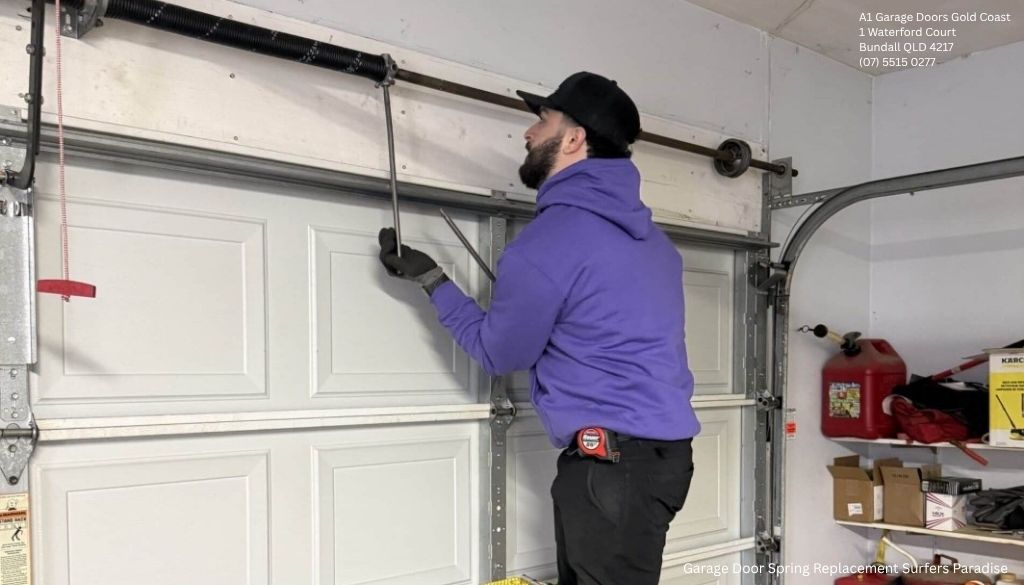
Garage door springs deserve respect in any season. They are under tension and are not a casual do-it-yourself component. If the door feels unusually heavy, jerky, or out of balance in normal operation, that is not a storm prep footnote. It is a reason to stop and have the system checked by a qualified contractor. The same caution applies if the door binds in the tracks, slams shut, or strains when opening. Those symptoms can point to wear or misalignment, and a severe weather event is not the time to discover the system has been compensating for a fault.
Garage door tracks should also be viewed with a practical eye. If you can see obvious looseness, deformation, or signs that the rollers are not travelling cleanly, take that seriously. A door that does not move properly on an ordinary day is not going to inspire confidence when you need it closed, stable, and left alone.
For attached garages, there is another angle worth mentioning. Australian energy guidance notes that draught stoppers at the base of doors can help reduce heat loss. That is an energy-efficiency point, but it also nudges homeowners toward a broader habit of paying attention to openings and seals. A garage that is routinely left with gaps, poor sealing, and neglected maintenance is often a garage where larger issues have gone unchecked. Draught-proofing is not cyclone protection by itself, but the maintenance mindset is related.
When unplugging helps, and when it misses the point
People often ask whether they should unplug the garage door opener itself. The safest answer, based on the verified guidance, is to focus first on unplugging electrical items and reducing unnecessary powered equipment in the garage before the storm, then avoid going out once conditions become dangerous. If the opener can be safely left in a settled state after the door is secured, that is the goal. What you do not want is a pattern where the opener is repeatedly used, reset, or fussed with as weather worsens.
The bigger mistake is thinking that unplugging equals protection. It is one part of preparation, not the whole plan. A homeowner may unplug a bank of chargers and still leave the garage door unbraced, the tracks neglected, or the opening vulnerable. Another may carefully organise remotes while postponing a clearly needed garage door replacement. Those are backwards priorities.
A storm-ready garage is built on layers. Structural integrity comes first. Safe access and closure come next. Electrical tidiness supports both. The opener is part of the system, but not the centre of it.
The role of remotes, wall controls, and access planning
Access planning is where electrical safety becomes practical rather than theoretical. If a household owns two cars and both usually stay outside, official advice to park vehicles under shelter if possible means deciding early who moves first, where the keys are kept, and whether the garage has enough room to close without re-opening for forgotten items. That sounds mundane, but during a real warning the household that already worked this out is calmer and faster.
Remote controls should be treated as conveniences, not as the emergency plan. If a remote is unreliable, replace the habit of depending on it with a more deliberate routine. Make sure the wall control is obvious and accessible. Keep the path to it clear. Avoid stacking bins, bikes, or sports gear where someone would need to climb over them in poor light. If the opener has a manual release, know where it is and make sure it is not obstructed. That is not an invitation to experiment with spring-loaded hardware casually. It is simply part of understanding the access points in your own garage before a storm makes decisions for you.
I have seen garages where the opener worked fine but the surrounding space made safe use difficult. One had a chest freezer pushed so close to the wall control that the owner had to turn sideways to reach it. Another had loose outdoor items piled near the door tracks, exactly where they would have become awkward to secure in a hurry. Official guidance to secure loose outdoor items applies here too. The garage often becomes the last refuge for chairs, tools, pots, and bins before a storm. If those items block the controls or interfere with door movement, they create a problem while trying to solve another.
Signs it is time to call a qualified contractor
There is a strong temptation to treat garage doors as simple household equipment until they force the issue. Storm preparation is one of the moments when that attitude should change. Queensland guidance on securing vulnerable parts of the home points homeowners toward working safely or using a qualified contractor. That is good advice with garage systems.
Call for professional help if any of these are true:
- You do not know whether the garage door is wind rated or compliant. The door appears non-compliant or older and lacks a known bracing system for cyclone preparation. The opener, springs, or tracks show signs of strain, imbalance, or damage in everyday use. The garage door frame or opening condition raises doubts about storm resilience. You are considering garage door replacement to improve resilience and need the correct door and frame solution.
That last point deserves emphasis. Garage door replacement is not always the most expensive resilience upgrade people imagine, and official Queensland resilience material specifically identifies non-compliant garage doors as a worthwhile replacement target. If the opening is a weak link, changing the door and frame to a wind-rated setup can be a more rational investment than spending piecemeal money on accessories that do not address the real risk.
A note on product safety and accessories
There is a tendency in the garage door market to get distracted by add-ons. Extra remotes, lighting modules, plug-in accessories, convenience devices, and aftermarket bits all promise ease. Safety standards matter here. Australian product safety rules exist because products that are covered by mandatory standards must meet specific criteria before sale. For homeowners, the practical takeaway is straightforward: treat the electrical side of the garage with the same seriousness you would give any other household equipment. Avoid dubious add-ons, improvised fixes, or bargain accessories of uncertain quality, especially when your goal is storm readiness.
That does not mean every accessory is unsafe. It means storm preparation is the wrong time to introduce uncertainty into an electrical setup. If you are upgrading, do it with reputable products and appropriate installation, and do it before the season becomes urgent.
Attached garages, pressure, and the bigger house
One reason garage door integrity ranks so high in cyclone and storm guidance is the effect a failed garage door can have on the rest of the home. If wind gets into the garage, internal pressure can increase and contribute to broader damage to walls and roof structures. That is why garage discussions can never be only about convenience or automation.
For attached garages in particular, the opener should be seen as part of a defensive sequence. You want the door capable of resisting the expected conditions, the opening and frame in proper condition, any required bracing installed before the event, and the household routines arranged so the door can be shut and left closed early. Electrical safety supports that sequence by reducing unnecessary device exposure and by keeping the access process orderly.
There is also a practical family dimension here. Households with children, pets, older residents, or multiple drivers often reopen the garage more times than they realise in the hours before a storm. Someone remembers a charger, someone else wants to move outdoor furniture, another person comes home late and assumes there is still time. The best storm prep I see is rarely dramatic. It is coordinated. Cars are moved early. Loose items are secured early. The garage door comes down early. Electrical items are unplugged early. Then the household stops creating fresh reasons to use the opening.
The judgment call between maintenance and replacement
Not every noisy door needs replacing, and not every old opener is automatically unsafe. But storms are a useful deadline for honest decisions. If the door is basically sound, properly rated, and supported by the right bracing approach, then maintenance and a disciplined pre-storm routine may be enough. If the system is suspect, vague, or visibly out of date in ways that affect resilience, then repair or garage door replacement becomes the more professional answer.
This is where homeowners benefit from resisting the cheapest apparent fix. Replacing a remote or adjusting a travel setting can feel satisfying because it produces immediate movement. Yet if the real issue is that the opening is the weak point in the house, money spent on surface-level convenience can delay the work that actually matters.
A good contractor will usually bring the conversation back to fundamentals. What is the door rated for? Is the frame suitable? Is there an approved bracing system where required? Are the garage door tracks and hardware in sound condition? Are the garage door springs functioning properly? Once those answers are clear, the opener becomes easier to assess in context.
Before the weather arrives, keep the plan boring
That is really the goal. Storm preparation for garage door openers should be boring. No scrambling for extension leads. No guessing whether the door should have been replaced years ago. No trying to install a forgotten bracing kit in rising wind. No moving cars in the dark because the forecast was ignored all afternoon.
The households that manage storms best usually do not have a dramatic trick. They simply respect timing. They prepare before storm season. They deal with weak points while trades are available. They use qualified contractors when the work affects safety or resilience. They secure loose items, park vehicles under shelter if possible, unplug electrical items that do not need to stay connected, and stop going in and out once conditions turn unsafe.
For garage door openers, that means treating the motor as one piece of a larger system. The electrical step is important, but the stronger lesson is this: a safe garage before a storm is the result of clear priorities. A sound door. Suitable wind resistance. Safe, uncluttered access. Sensible power management. And decisions made early enough that no one is standing in the garage doorway trying to solve structural, electrical, and weather problems at the same time.