Coastal conditions are hard on almost everything attached to a house, and garage doors are no exception. People tend to notice the obvious signs first: a louder door, slower movement, a remote that seems less responsive, or a panel that looks slightly uneven when it closes. What often sits behind those symptoms is a combination of alignment drift and component wear, made worse by salt air, humidity, and heat.
That pattern shows up often in places like the Gold Coast, where garage door businesses regularly handle repairs, servicing, motor work, spring replacement, automation upgrades, and replacement of remotes and other hardware. The service mix itself says a lot. These are not one-off failures from freak accidents. They are the kinds of issues that build gradually in a climate that puts steady pressure on moving parts.
A garage door is a large moving assembly, but its reliability depends on small relationships staying correct. The door needs to travel evenly. The opener needs to pull or guide a door that is properly balanced. Springs need to support the weight the way they were designed to. Hardware has to keep its shape and hold its position over time. When coastal exposure accelerates wear, the system can still work for a while, but it rarely works as smoothly as it once did.
Why alignment problems show up differently near the coast
Garage door alignment is often misunderstood because people expect it to look dramatic, like a door hanging at an angle or jammed halfway open. In practice, misalignment usually begins as something subtle. The door may hesitate during the last stretch of travel. One side may seem to seat a little earlier than the other. A door that once moved quietly may start scraping, rattling, or shuddering.
In coastal areas, the environment adds a slow but persistent strain. Salt air and humidity can affect hardware, and heat adds another layer of stress over time. None of that means every coastal garage door is destined to fail early. It does mean maintenance matters more, and small changes should not be ignored.
A homeowner might notice that the garage door is not closing properly and assume the opener is the problem. Sometimes that is true. Motor replacement and garage door opener repair are common services in coastal markets, and automation upgrades for existing doors are widely offered. But an opener can only do so much if the door itself is no longer moving as it should. A strained opener may be reacting to alignment or balance problems rather than causing them.
That distinction matters because replacing the wrong part wastes money and leaves the real issue untouched. A new motor installed on a poorly aligned or poorly balanced door may still struggle. It might run, but not well, and not for long.
The quiet link between wear and alignment
Alignment and wear feed each other. A door that falls slightly out of alignment puts extra demand on other components. Those components then wear faster, which can pull the system even further out of alignment.
Think about a door that no longer tracks smoothly. The opener may have to work harder to move it. The springs may no longer be sharing the load evenly. Fasteners and hardware may experience movement they were not meant to absorb. Over time, the problem spreads through the system. What started as a minor issue becomes a set of related ones.
This is one reason experienced technicians often look at the whole door rather than one symptom in isolation. If someone calls because the garage door is not closing properly, the underlying cause might involve wear in more than one place. It may be tempting to focus on the remote, the motor, or the visible edge of the door, but the smarter approach is to consider how the system is behaving as a whole.
In coastal areas, that systems view becomes even more important. Salt air, humidity, and heat do not target one part neatly. They influence the entire assembly over time.
What homeowners usually notice first
Most people do not inspect their garage door closely until it starts acting up. The first clues are usually practical rather than technical. The door sounds rougher. It opens or closes less smoothly. It garage door resource stops short or reverses unexpectedly. Or it leaves a gap that was not there before.
Some warning signs deserve quick attention because they suggest the door is under strain:
- the door moves unevenly or appears to sit crooked at any point in travel closing becomes inconsistent, especially if the door used to shut cleanly the opener sounds like it is working harder than usual the door becomes noisier without an obvious one-time cause springs or hardware appear damaged, worn, or out of position
Even then, judgment matters. A single rough cycle on a very hot day is not always evidence of a major fault. Repeated changes, especially changes that get worse over days or weeks, are harder to dismiss.
A homeowner trying to fix garage door issues without understanding the interaction between parts can make things worse. That is particularly true when springs enter the picture.
Springs deserve a separate conversation
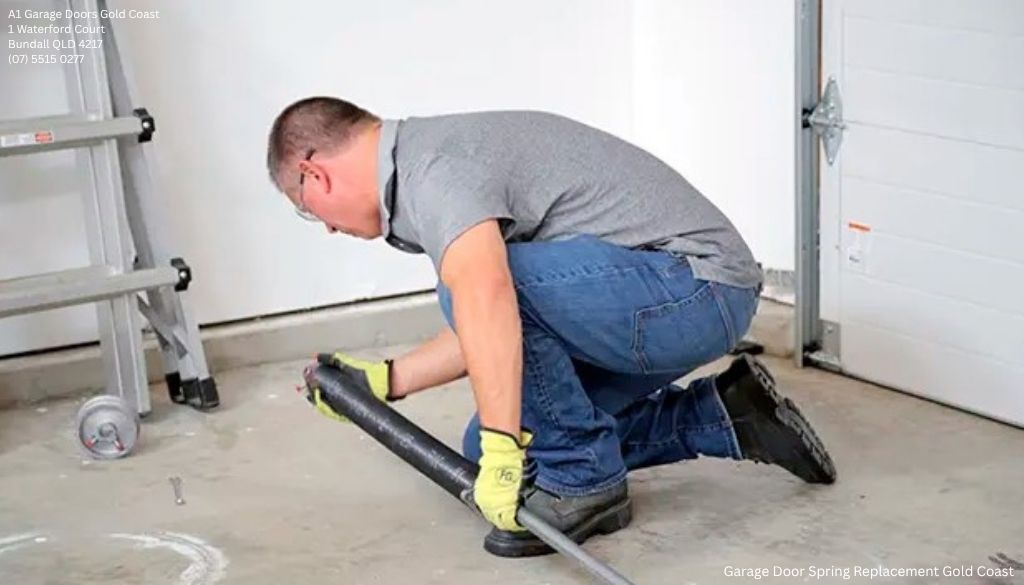
Springs are central to safe and smooth operation, and they are not a casual do-it-yourself repair. Industry and safety guidance is clear that garage door springs are under high tension and can be dangerous to adjust or repair without proper training and tools.
That warning is not just legal caution. It reflects the actual forces involved. A garage door can be heavy, and the springs are there to help counterbalance that weight. When a spring fails, the door can suddenly behave very differently. The opener may strain, the travel may become erratic, and the door may become difficult or unsafe to operate.
There is also a practical point that many homeowners do not hear until a technician explains it on site. When one spring breaks, both springs may need replacement because they usually wear at a similar rate. Mismatched springs can create balance problems. That matters for alignment, for opener performance, and for the overall life of the system.
This is a good example of how a repair decision is not just about replacing the visibly broken part. It is about restoring balance across the whole mechanism. In coastal conditions, where wear may already be affecting other components, balance becomes even more important.
The opener is often blamed, but not always guilty
When a door stops behaving properly, people often jump straight to the motor. That is understandable. The opener is the visible piece of automation, and if the door refuses to cooperate, the motor seems like the obvious suspect.
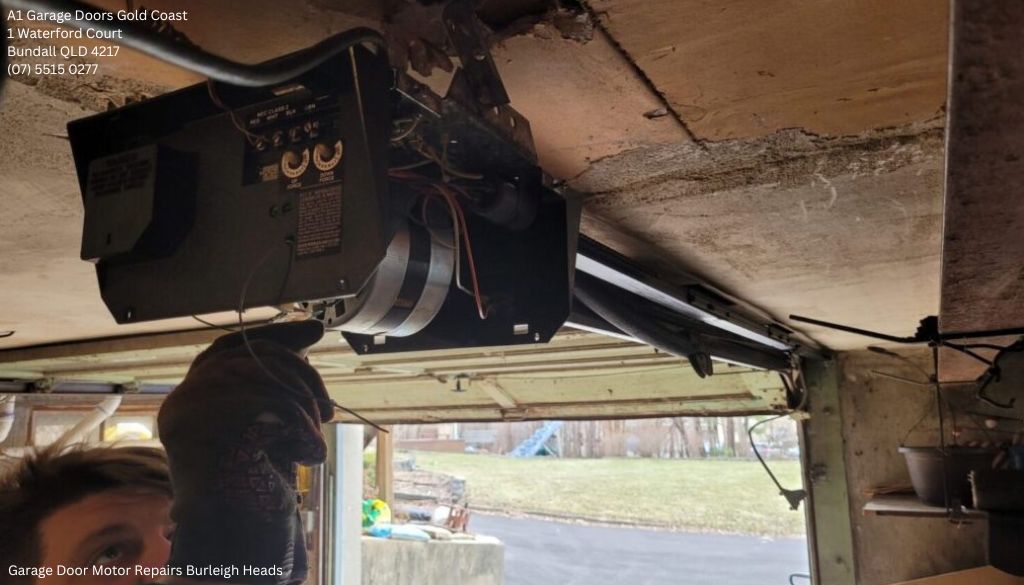
In reality, garage door opener repair is only one branch of the diagnostic tree. Gold Coast service providers commonly handle motor replacement and installation, and automation upgrades are a standard offering for existing garage doors. That tells us opener issues are real and common. It does not mean every faulty door needs a new opener.
A motor can fail or weaken over time, but an opener can also appear to fail because it is being asked to move a door that is dragging, unbalanced, or misaligned. That is an important trade-off to understand. Replacing a worn opener on a healthy, well-aligned door can make sense. Replacing an opener without addressing the resistance coming from the door itself often leads to repeat problems.
A good technician typically pays attention to how the door travels, whether the movement looks even, and whether there are signs that other components are contributing to the issue. If the system is fighting itself, the opener is often the first part the homeowner notices and the last part that fix garage door should be judged on appearance alone.
Coastal wear tends to be gradual, not dramatic
One challenge with coastal component wear is that it often develops gradually enough to normalize. If a door gets a little louder each month, many people stop hearing the change. If the closing path becomes slightly rougher over time, it may not seem urgent until the door finally refuses to cooperate.
That gradual drift is where regular servicing earns its keep. At least one Gold Coast garage door business recommends professional servicing every 12 months to help prevent breakdowns and extend the life of the door and motor. In coastal areas, that advice is sensible. Annual service gives someone trained in the system a chance to spot developing issues before they become breakdowns.
There is a real financial difference between maintenance and reaction. A door that receives regular attention is more likely to have small issues corrected while they are still small. A neglected door often turns a minor adjustment or replacement into a wider repair because the stress has already spread.
This is especially relevant for owners who use the garage as the main entry to the home. High use does not automatically equal failure, but it does mean wear becomes more consequential. If the garage door cycles multiple times a day, a small alignment problem can place repeated stress on the opener, springs, and hardware long before the owner realizes anything is off.
When poor closing is really an alignment problem
The phrase garage door not closing properly covers a wide range of complaints. Sometimes the door stops short. Sometimes it closes but does not sit evenly. Sometimes it appears to close and then behaves unpredictably. People often describe the symptom well, even if they cannot identify the cause.
From a practical standpoint, poor closing is one of the clearest reasons to investigate garage door alignment. A door that cannot settle properly at the end of travel may not be moving squarely through its path. It may also be dealing with related wear elsewhere in the system.
That does not mean every closing issue is severe. Some are caught early and corrected without major parts replacement. Others uncover larger wear patterns, especially in older systems or in doors that have gone a long time without service. The key is not to force operation when the door is obviously struggling. Repeatedly running a door that is binding or moving unevenly can add strain to the opener and other components.
In real service situations, one of the most useful things a homeowner can provide is a timeline. Did the problem start suddenly? Has it worsened over a month? Does it happen every time or only in certain conditions? Those details help separate a single failure from the slow effects of wear.
Repair, replace, or upgrade
Not every coastal garage door problem calls for the same response. Some situations call for repair. Others make replacement or upgrade more sensible. The local market reflects that range, with providers offering standard repairs, spring replacement, motor work, installations, and automation upgrades.
The right choice depends on the condition of the system, not just the age of one part. If the opener is failing but the door remains well aligned and otherwise sound, a garage door opener repair or motor replacement may be reasonable. If the springs are worn and balance is poor, spring replacement may be the more urgent issue. If several components are aging together, a piecemeal approach can become inefficient.
That is where practical judgment matters more than slogans. The cheapest immediate fix is not always the least expensive path over the next year or two. On the other hand, replacing everything at once is not automatically wise if the core structure of the door and its main systems are still in good condition.
Homeowners often ask whether they should fix garage door issues now or wait until something actually fails. In coastal conditions, waiting tends to be less forgiving. Small wear patterns have more opportunities to cascade because the environment keeps applying pressure.
What a sensible maintenance approach looks like
A useful maintenance mindset is less about constant tinkering and more about paying attention. You do not need to become a garage door specialist to notice changes in how your door sounds, moves, and closes. You do need to treat those changes as meaningful.
Professional servicing on a regular schedule, such as every 12 months, is one of the most defensible habits for coastal properties. It creates a baseline and gives the system a routine check before obvious trouble starts. Between services, homeowners can watch for changes in operation and avoid forcing a door that is behaving abnormally.
A practical approach usually includes these steps:
Pay attention to changes in noise, speed, and smoothness Arrange professional service at regular intervals rather than waiting for failure Treat spring problems as a safety issue, not a do-it-yourself task If one spring fails, ask whether both should be replaced to avoid balance problems If the opener seems weak, have the door alignment and balance assessed as well
This is not an exhaustive technical checklist, and it is not meant to turn a homeowner into a technician. It is simply the most sensible way to avoid chasing symptoms while the underlying issue gets worse.
The cost of ignoring the early stage
The early stage of coastal wear is easy to underestimate because the door usually still works. It may work badly, noisily, or inconsistently, but it works enough that people put off dealing with it. That delay is often what turns an isolated repair into a broader one.
A slightly misaligned door can remain usable for a time. A spring can wear gradually before it fails. An opener can continue operating while under more strain than it should ever see. None of that means the system is healthy. It only means it has not quit yet.
There is also a safety dimension that should not be softened. Springs are dangerous to adjust or repair without proper training and tools. If there are visible spring issues or if the door suddenly feels very different in operation, that is not the moment for improvisation.
For many coastal homeowners, the best way to think about garage door care is the same way they think about other exposed mechanical systems around the house. Salt air, humidity, and heat do not always cause immediate breakdowns, but they shorten the distance between minor wear and real trouble.
What durable performance really depends on
People often ask for a fix garage door solution as though there is a universal answer. There rarely is. Durable performance comes from keeping the door aligned, balanced, and properly serviced, and from repairing the right component at the right time.
That may mean spring replacement. It may mean garage door opener repair. It may mean replacing a motor, updating automation on a current door, or correcting the wear that is making the entire system run poorly. What matters most is understanding that coastal conditions increase the value of early attention and professional assessment.
A garage door is easy to take for granted because it repeats the same task every day. Open, close, open, close. When it is working well, nobody thinks about the strain involved. In a coastal area, that routine only stays smooth when alignment is preserved and worn parts are dealt with before they compromise the rest of the system.
That is the heart of the issue. Coastal wear is not only about corrosion or climate in the abstract. It is about how those conditions gradually alter the relationship between moving parts. Once that relationship shifts, the symptoms show up where homeowners notice them most: rough travel, poor closing, strained motors, and doors that no longer feel trustworthy. Regular service, prompt attention to changes, and respect for high-tension components are what keep those symptoms from turning into larger problems.